
 Author : Komalalakshmi M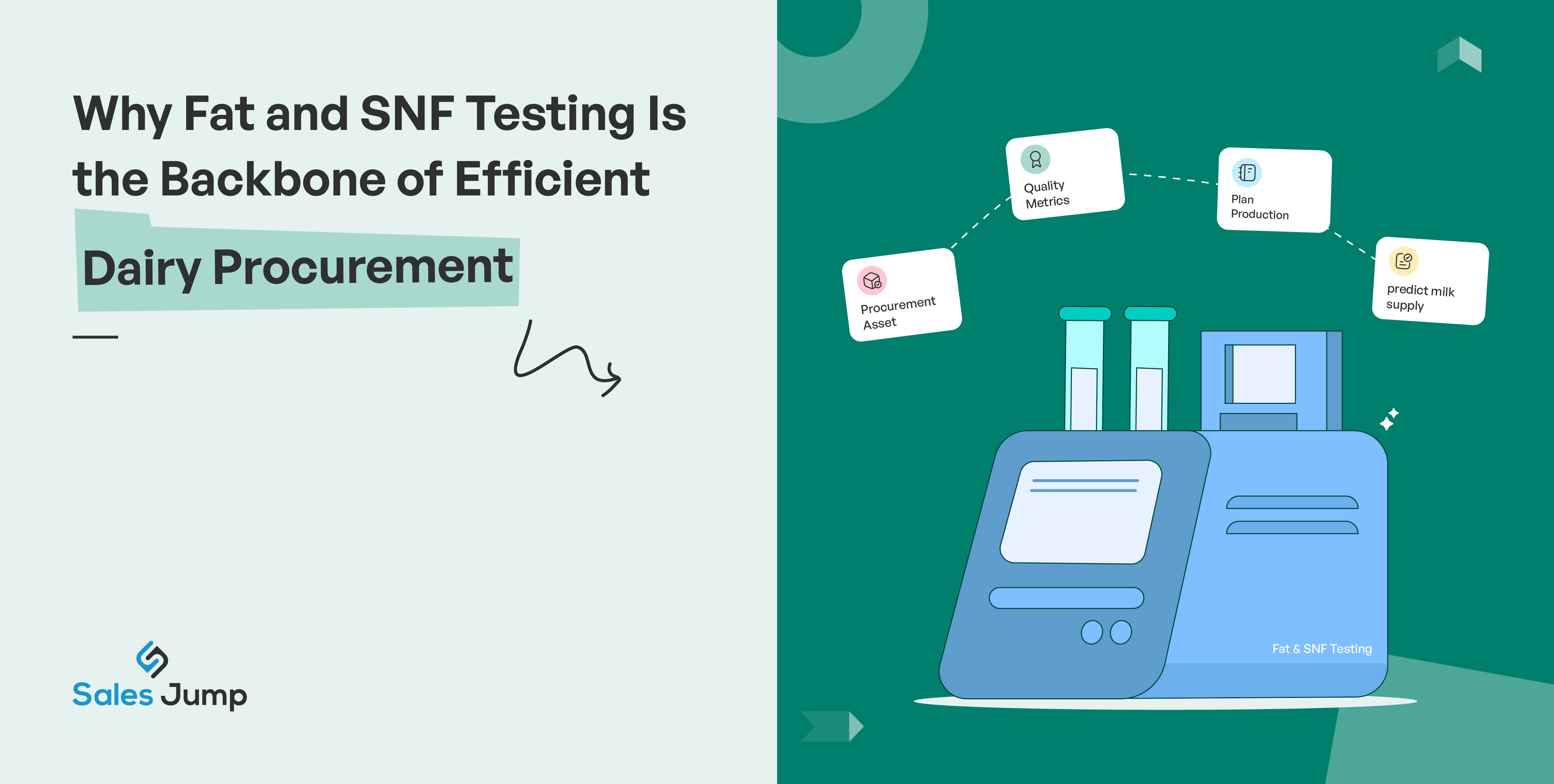
The Daily Reality of Dairy Procurement
Every day, thousands of litres of milk travel from village collection centers to dairy processing plants. What appears to be a routine operation is actually a complex process involving multiple stakeholders-farmers, collection centers, quality testing teams, and procurement managers.
At the heart of this system lies one critical step: milk quality testing.
For dairy companies, ensuring the quality of milk is not just about maintaining product standards. It directly influences farmer payments, processing efficiency, and overall supply chain reliability. This is where fat and SNF testing plays a crucial role.
While these measurements are standard across the dairy industry, managing them accurately and consistently across multiple collection points can be challenging-especially when operations rely on manual records or fragmented systems.
Understanding Fat and SNF in Milk
Two key parameters determine the value and quality of milk collected from farmers.
✨ Fat Content
Milk fat, often referred to as butterfat, is one of the primary indicators of milk richness and quality. It directly affects the yield of dairy products such as butter, cream, ghee, and cheese.
Higher fat content generally means higher value for both the dairy processor and the farmer supplying the milk.
✨ SNF (Solid-Not-Fat)
SNF refers to the portion of milk that remains after removing water and fat. It includes proteins, lactose, minerals, and vitamins.
SNF plays an important role in determining the nutritional quality and processing stability of milk. Dairy companies rely on SNF levels to ensure consistency in products like milk powder, yogurt, and paneer.
Together, fat and SNF values form the scientific basis for milk quality assessment and pricing in dairy procurement.
How Fat and SNF Determine Farmer Payments
In most dairy procurement systems, milk pricing is calculated based on fat and SNF percentages. When farmers bring milk to a collection center,
The typical process involves:
✔ Measuring the quantity of milk delivered.
✔ Testing the milk using a milk analyzer to determine fat and SNF levels.
✔ Recording the results.
✔ Calculating the payment based on predefined pricing formulas.
This system ensures that farmers are compensated fairly according to the quality of milk they supply.
However, the accuracy and transparency of this process depend heavily on how the data is captured and managed.
Operational Challenges in Traditional Milk Procurement
Despite standardized testing procedures, many dairy companies still face operational challenges in managing procurement data across multiple collection centers.
✨ Manual Record Keeping
Many collection centers still rely on manual registers or spreadsheets to record milk quantities and test results. This increases the risk of data entry errors and inconsistencies.
✨ Lack of Real-Time Visibility
Procurement managers often have limited real-time visibility into milk collection data across different locations. This makes it difficult to track procurement trends or detect anomalies quickly.
✨ Farmer Payment Disputes
When records are not transparent or easily accessible, disputes can arise regarding milk quality readings or payment calculations.
✨ Fragmented Data Management
Data collected from different procurement points may not always be centralized, making it harder to analyze procurement patterns or plan production effectively.
Over time, these inefficiencies can impact operational accuracy, farmer relationships, and overall procurement efficiency.
Why Data Accuracy Matters in Dairy Procurement
Accurate fat and SNF data does more than determine payments. It also influences key business decisions within dairy operations.
Reliable procurement data helps dairy companies predict milk supply volumes more accurately, plan production schedules based on quality metrics, maintain consistent product standards, and strengthen trust with farmer networks.
In a competitive dairy industry where margins can be tight, even small inefficiencies in procurement processes can lead to significant operational challenges.
The Shift Toward Digitized Milk Procurement
To overcome these challenges, many dairy companies are gradually moving toward digitized procurement systems.
By integrating digital tools at collection centers, dairies can automate several critical processes, including recording milk quantities and quality parameters, capturing fat and SNF readings directly from milk analyzers, automatically calculating farmer payments, consolidating procurement data across multiple locations, and generating real-time operational reports.
Digitization not only improves accuracy but also creates greater transparency throughout the procurement process.
For farmers, this builds trust. For dairy companies, it improves operational control and decision-making.
Improving Procurement Efficiency Through Digital Systems
Modern dairy management platforms are designed to streamline procurement operations while maintaining data accuracy.
Digital systems can help dairy companies eliminate manual record keeping at collection centers, maintain consistent records of fat and SNF readings, ensure transparent and automated farmer payment calculations, provide real-time visibility into procurement performance, and track procurement trends across different regions or farmer groups.
By centralizing procurement data, dairy companies can gain a clearer understanding of supply patterns, quality trends, and operational efficiency.
Building a Transparent and Scalable Dairy Procurement System
As dairy operations expand and supply networks grow larger, managing procurement manually becomes increasingly difficult.
Scalable dairy operations require systems that can manage data from multiple collection centers, track quality parameters consistently, support accurate and timely farmer payments, and provide insights for procurement planning.
Specialized platforms such as SalesJump Go Dairy are designed to support these needs by helping dairy companies digitize and streamline milk procurement processes.
By bringing procurement data, quality testing records, and operational insights into a unified system, dairy organizations can improve both efficiency and transparency across their supply chain.
The Future of Dairy Procurement
Fat and SNF testing will always remain fundamental to dairy operations. However, the way this data is captured, managed, and analyzed is evolving.
As the dairy industry continues to modernize, companies that adopt data-driven procurement practices will be better positioned to manage quality, strengthen farmer relationships, and scale their operations efficiently.
Digitizing procurement is no longer just about convenience-it is becoming an essential step toward building a more transparent, efficient, and resilient dairy supply chain.